Overview
LaneCraft's take on duckpin bowling. Five pins in an arrow-shaped layout, three shots per frame, and a weighted scoring system where the headpin is worth the most.
How It Works
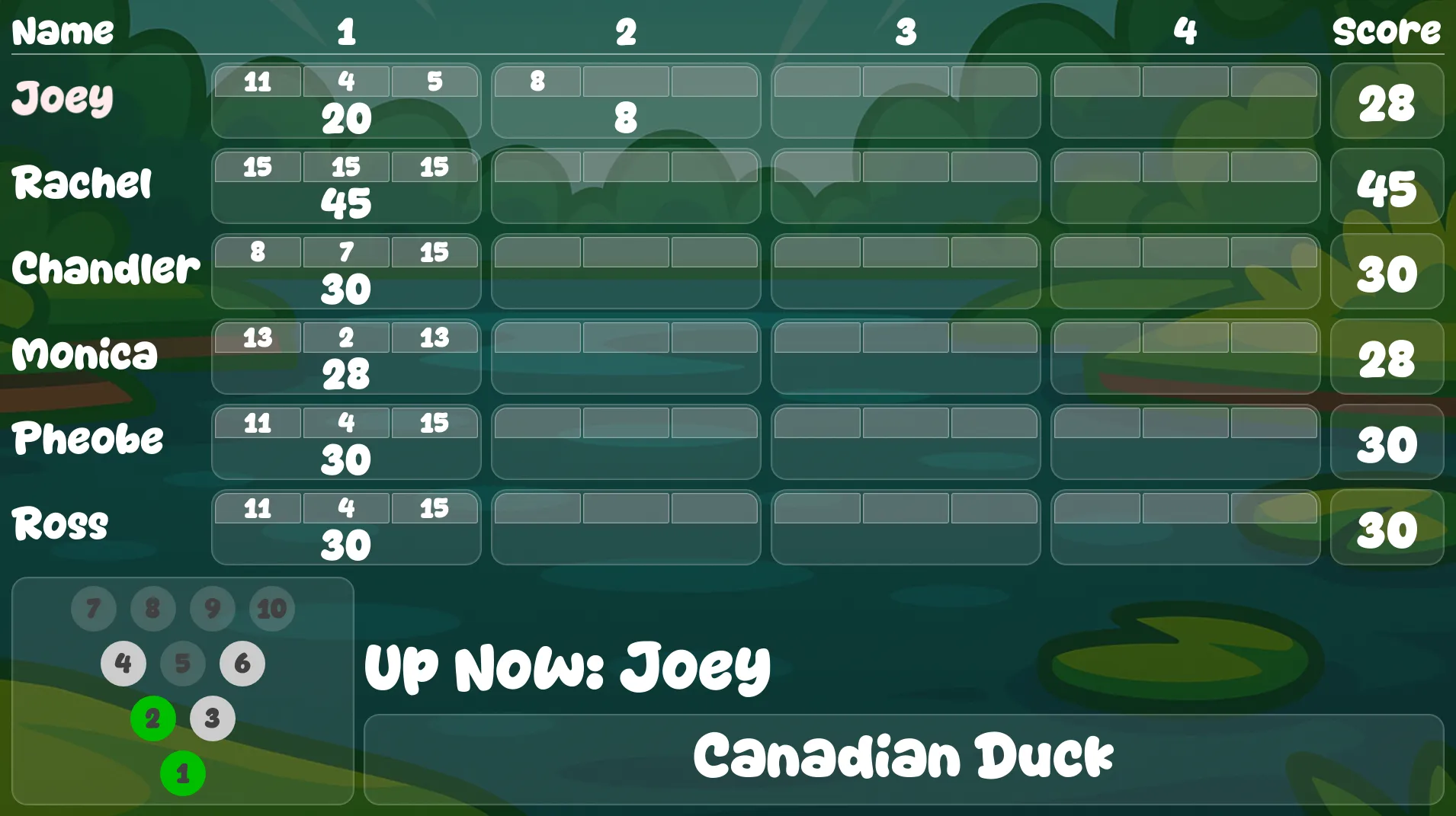
Five pins are set using individual pin control in an arrow-shaped pattern that approximates a duckpin layout. Each pin carries a different point value: the headpin at the front is worth 5, the second row 3 each, and the back pins 2 each.
You get three shots per frame across four frames. Pins only reset once you have knocked them all down, so any pins left standing after your first shot stay where they are. The arrow shape makes splits much more common than in standard bowling, which means those three shots are not as generous as they sound.
The Background
Duckpin bowling is a North American format played with smaller pins and balls, where players get three shots per frame instead of two. Canadian Duck brings that format to a LaneCraft lane, using individual pin control to set a reduced pattern that captures the feel of duckpin without needing separate equipment.
What Makes It Different
Three shots per frame changes the rhythm completely. You have more time to work through the pins, but the weighted scoring means a careless first shot can waste the whole frame. Do you clear efficiently, or go after the high-value headpin early and risk leaving an awkward split?
Who It’s For
Players who like quick rounds and clear targets. The three-shot format keeps it accessible for beginners, but the weighted scoring gives experienced players something to optimise. Easy to explain, hard to master.
Parent’s Guide
The arrow shape means splits are common, and pins do not reset until you clear them all. If you leave two pins on opposite sides after your first shot, you are stuck with them for the rest of the frame. Aim for the back row and “accidentally” miss the headpin. If anyone asks, you were working on your precision. Getting caught in a split and wasting your remaining shots looks completely natural in this game.