How Much Does a Home Bowling Alley Cost in Australia? (2026)
Home bowling alley costs in Australia explained: LaneCraft systems start from $92,000 for a single lane. What is included, what your builder handles, and what it costs to run.
The Short Answer
LaneCraft residential systems start from:
| Configuration | Indicative starting price |
|---|---|
| Single-lane system | From $92,000 |
| Double-lane system | From $139,500 |
Australian dollars, and a starting point rather than a quote. They exclude shipping, travel, and accommodation, which depend on where the project is.
In capital terms a private lane sits alongside a high-end home theatre or a modest swimming pool. Where it differs is afterwards: the running costs are closer to a household appliance than a pool, and the lane gains new games over time rather than just ageing.
What We Build, and What Your Builder Builds
Most confusion about bowling lane pricing comes from quotes covering different things. Here is where our line sits.
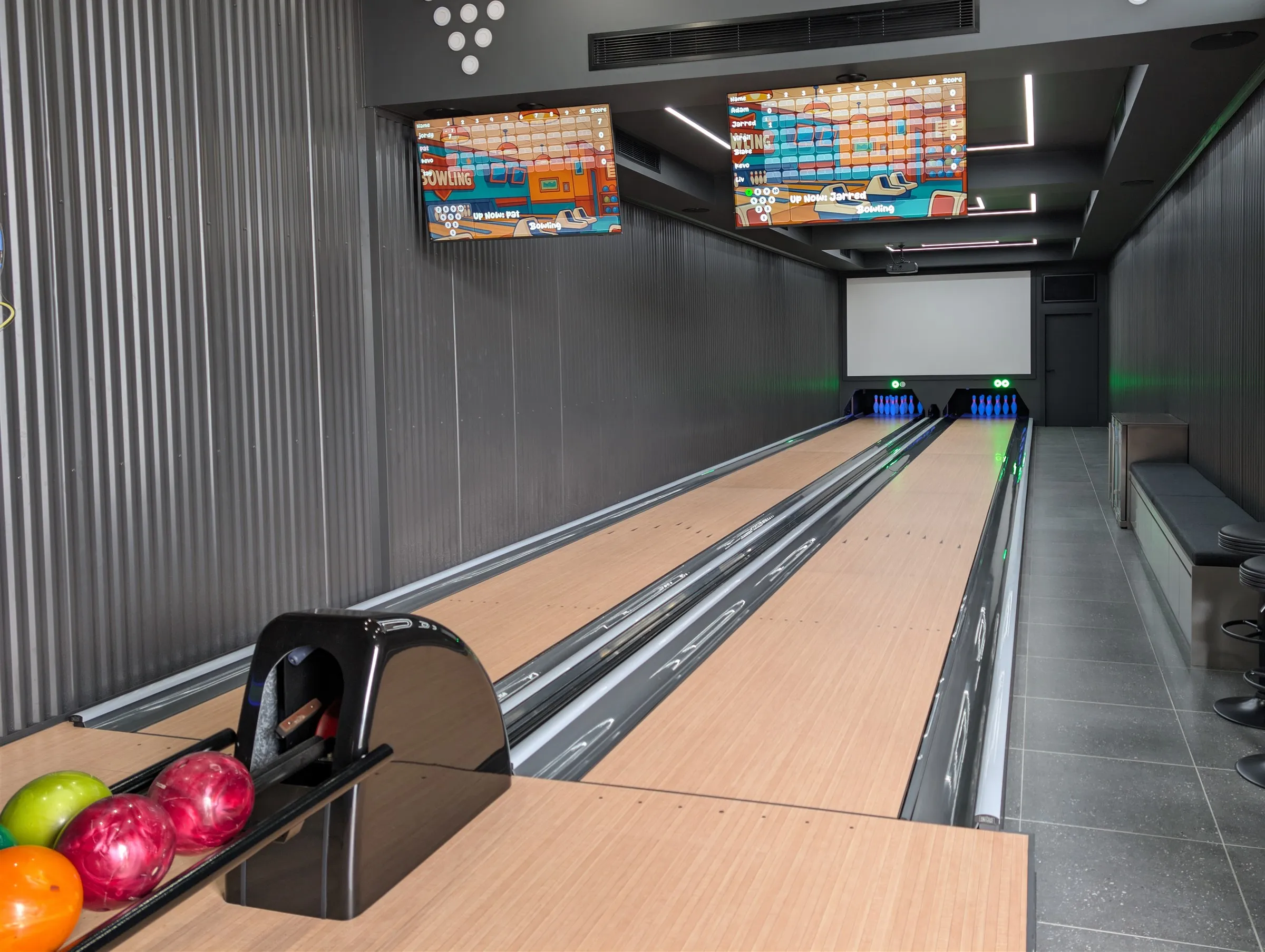
We build and install the lane: design and format planning, substructure and subfloor, lane surface, capping and pin deck, pinsetter and mechanical systems, ball return, scoring console and software, installation, calibration, commissioning, handover and ongoing support.
Your builder handles the space it sits in: the room or shed, concrete and slab work including the set-down, electrical rough-in, HVAC, wall linings, acoustic treatment, joinery and finishes. We do not pour concrete or build rooms. We tell your builder exactly what the lane needs and work to what they hand over.
That split is worth holding onto when you compare quotes. If a figure looks dramatically cheaper than the one above, it is usually pricing a different product rather than the same thing done cheaply. Often that means a mini system, used commercial gear, or an imported kit you arrange installation for yourself.
What Moves the Number
Lane count. Two lanes cost more in total but less per lane, because they share the approach, controls, installation time and room preparation.
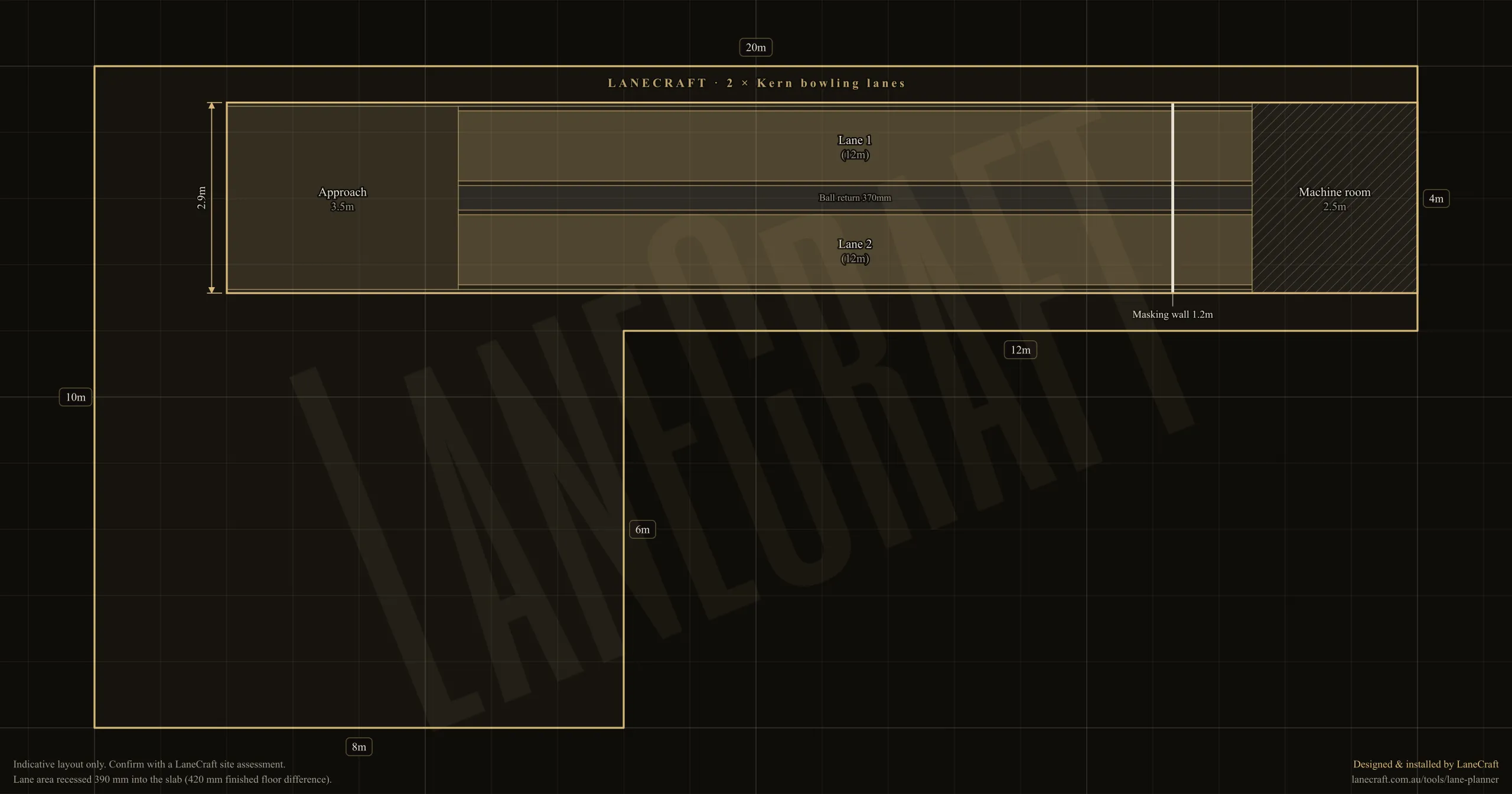
Format. Our compact KERN format needs about 18 metres in total against about 25.8 metres for full-length Tenpin, which decides whether some spaces work at all. You can test yours in a few minutes with the lane planner.
The space itself. This is the biggest variable, and it is mostly a building cost rather than a lane cost. A slab set-down planned in from the start (390mm below the surrounding slab, 420mm to finished floor level) with 2.1m of clearance above the lane is far cheaper than retrofitting a room that has neither. There is often more than one way to solve a site. On a recent private shed installation we built the lanes up as a platform over the existing concrete and recessed only the equipment room, rather than cutting up the whole slab.
Fit-out. A lane in a colorbond shed with utility lighting is a different budget to one with panelling, lighting scenes, seating and bar joinery. The lane system barely changes; the room around it changes enormously.
The single cheapest thing you can do is involve us at drawing stage. Changes then are straightforward. Changes after the slab is poured rarely are.
Timing
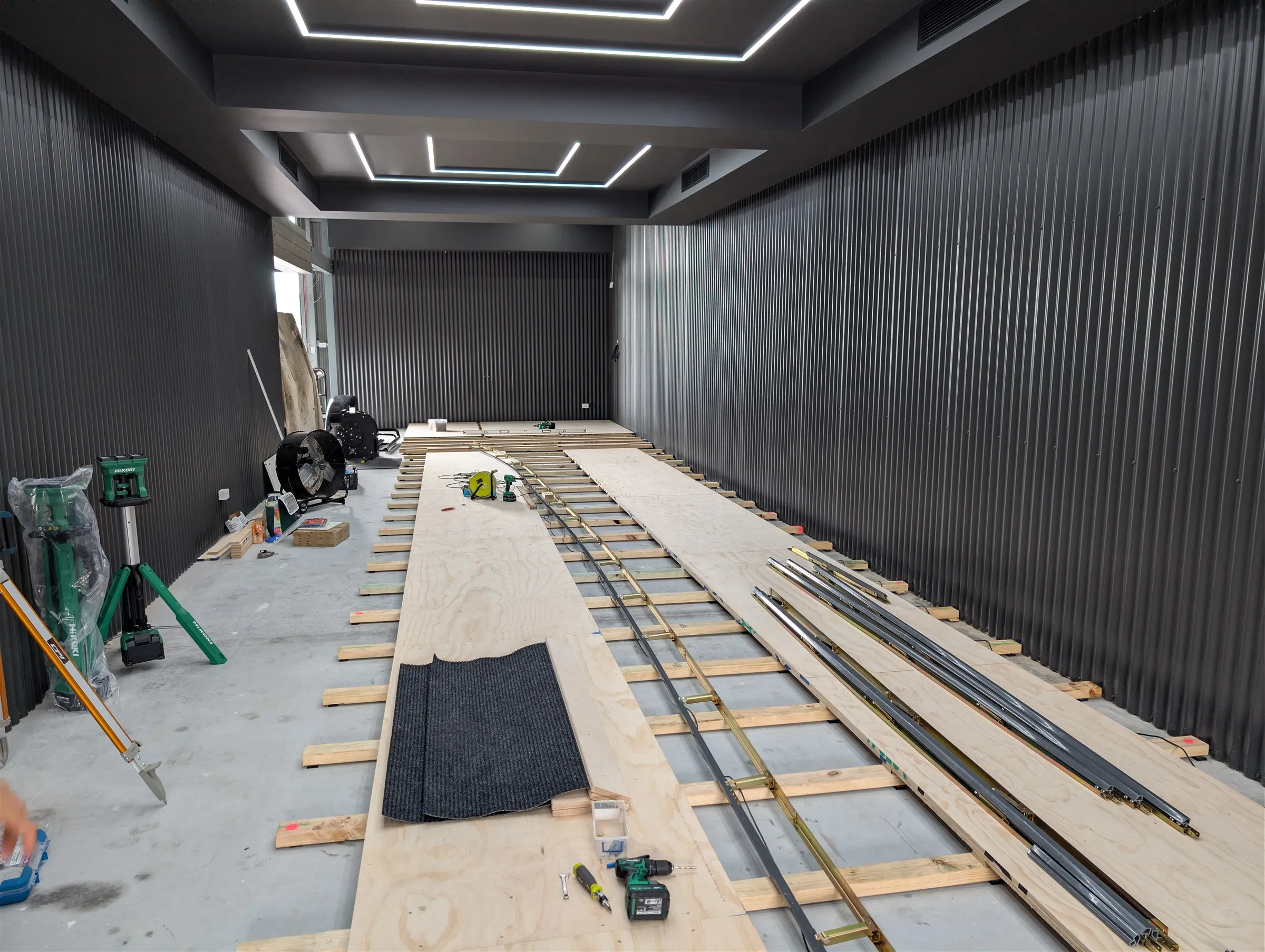
Machinery is built to order in Germany on roughly a three-month lead time, so the order goes in early. On site, installation takes about three weeks including commissioning and calibration, scheduled late in the build once the room is closed in and HVAC is running, but before final flooring.
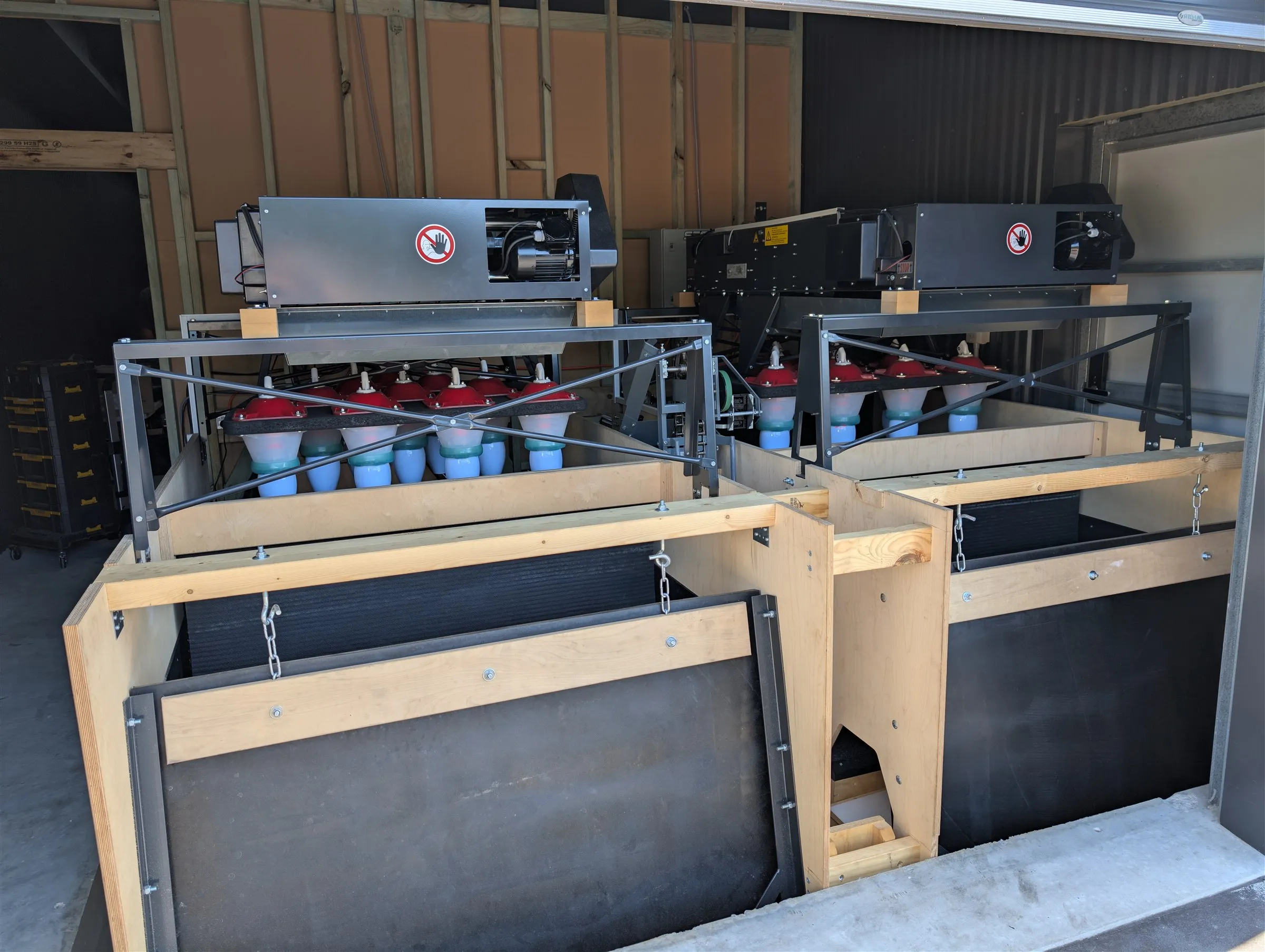
The machine room behind the pins is where most of the mechanical cost sits. Each pinsetter is around 300kg, and the mechanicals need roughly 420mm beneath the lane to run. That requirement is the main reason the set-down matters so much to the budget.
What It Costs to Run
- Power: about 400 watts per lane motor, drawing only during pin resets. A two-lane system running uses less than a kettle.
- Maintenance: high-pressure laminate surfaces need no sanding, oiling or refinishing. Periodic cleaning and annual mechanical servicing is the whole job.
- Consumables: none of consequence. No chemicals, no filters, no seasonal shutdown.
- Software: the base game library is included, and updates arrive as part of owning the lane. Extra game packs and a subscription tier are there if you want the catalogue as it grows.
What You Are Actually Buying
A bowling lane is part building work, part mechanical system, part software, part long-term maintenance item. The question that decides most projects is not the purchase price. It is who is accountable once it is in the ground.
A pieced-together project looks cheaper on paper. The costs that never appear on that paper turn up later: equipment with no local parts support, a scoring system nobody can modify, an installer who has moved on, and no single party responsible when the mechanical side and the software side disagree.
We design the lane, build and install it, write the software that runs it, and support it afterwards. The software is the part that is genuinely hard to buy anywhere else. Ours is built from scratch rather than licensed from an equipment vendor, so it is ours to change. Want the scoring altered, a mode tuned for your family, the interface matched to the room? There is no third-party supplier to petition. We write it.
Everything else in this guide is a number another supplier can quote you. That part, they cannot.
We couldn’t be happier with the results, including the after-installation support. Their team was professional, efficient, and clearly experts in their field who developed a specific game to suit our needs. Communication was excellent throughout the process, timelines were met as promised and the workmanship has been great.
The team at Toboggan Hill Park, Nelson Bay, where we installed four Kern lanes
Getting a Real Number
The figure for your project depends on the format, the space, and the level of finish. We give project-specific pricing after going through your space and drawings with you.
If you would rather start on your own, the lane planner shows what fits and produces a dimensioned drawing with the slab set-down your builder needs. If you are working with an architect, our guide for architects and builders has the technical detail.
Otherwise, get in touch or call 0423 729 986. We will tell you what fits, what it costs, and whether it is worth doing. And we will be the ones who build it.
Related: Check what fits with the lane planner | How to build a home bowling lane | How big is a bowling lane? | Explore our home bowling service