KERN
Bowling, Stripped Back to Its Core
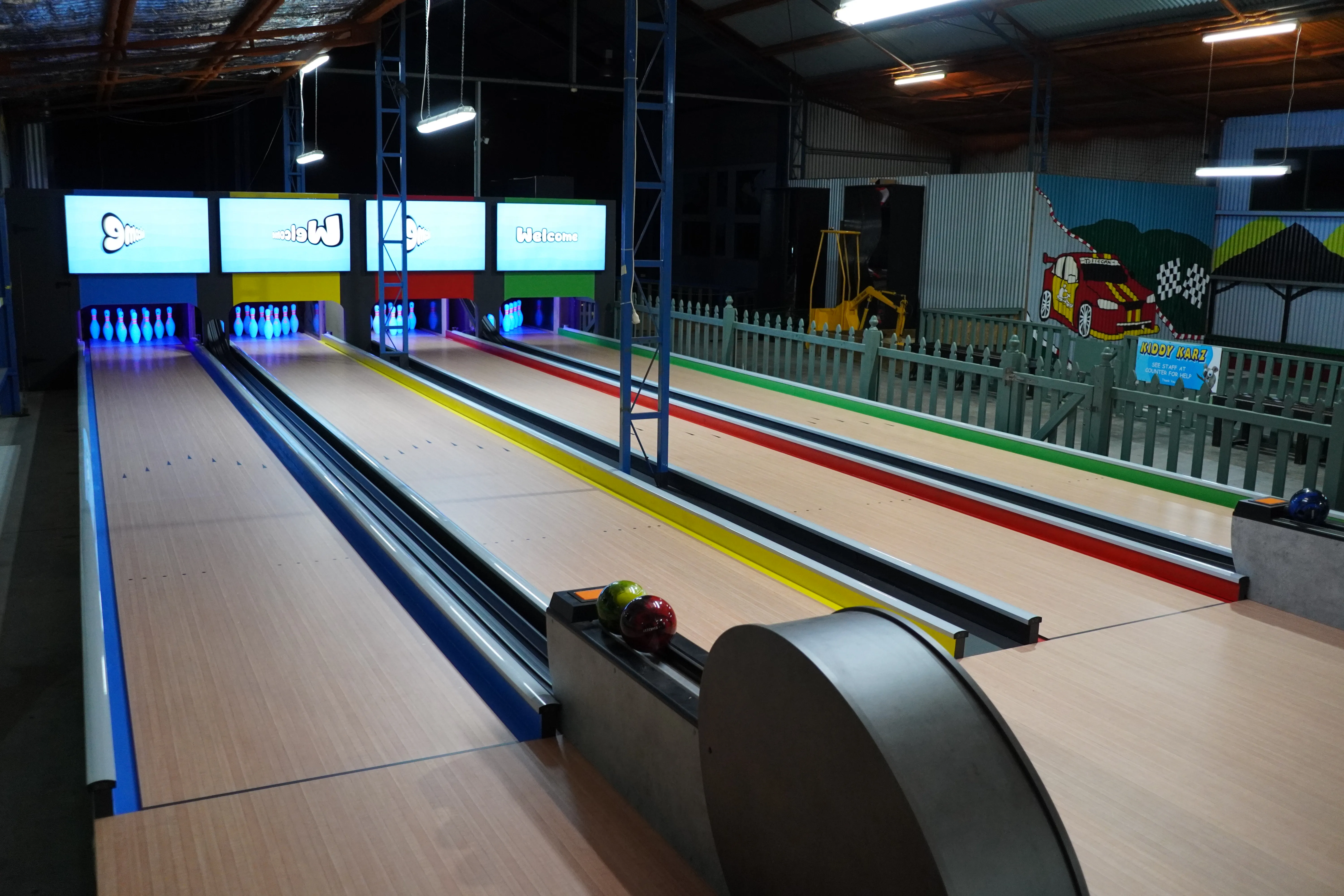
LaneCraft's compact bowling format. Full-size Tenpin pins, light same-weight balls, no gutters, no shoes, on a lane that fits where a regulation lane never could.
The Format
What Is KERN?
It is a smaller bowling experience built with almost nothing given up. We kept the full-size pins, scaled the ball to the shorter lane so it still plays like Tenpin, and removed only the things that were never really earning their place. The result fits where a regulation lane never could, without feeling like a cut-down version of the game.
Kern is the compact lane format we created, and this is the guide to what it is, how it works, and who it is for.
The Name
What KERN Means
KERN means familiar.
Ten full-size pins in the triangle every Australian already knows. The strike you are chasing is the one you grew up chasing.
KERN means accessible.
One ball weight, no sizing, no shoes. A six-year-old and a grandparent play the same game on the same lane, in whatever they arrived wearing.
KERN means fun.
No gutters. A near-miss stays in play instead of being punished for it.
KERN means competition.
With the right game mode running, a Kern lane asks more of you than traditional scoring ever did.
KERN means it fits.
Eighteen metres, not twenty-six. A shed, a basement, the room at the end of the house.
KERN means ours.
Designed by Australians, for the way Australians play, and built and supported here by the team that created it.
Engineering
How KERN Works
Kern is engineered, not shrunk. Every decision came back to one goal: a shorter lane that does not play like a compromise.
Full-size pins
Kern uses the same full-size pins as regulation Tenpin. The pocket, the chain reaction, the satisfying way a clean shot drives the pins through each other: all of it is intact. We did not swap in smaller pins or novelty equipment to save space. The target at the end of the lane is exactly the one you already know.
A KERN Ball scaled to the lane
Kern Balls are lighter than Tenpin balls, and that is deliberate. We scaled the ball to the 12 metre lane, so a proportionally lighter ball on a shorter lane behaves much like a full-weight ball on a full lane. A Kern shot rewards the same line, speed, and timing as Tenpin, which is why it plays like the real thing rather than a watered-down version of it. Every ball is also the same weight, so there is no sizing and no bowling shoes: anyone can pick one up and play.
No gutters, and that is the point
It is worth asking who gutters actually serve. Strong bowlers rarely find them. Younger or newer players who want a hand use bumpers, which a Kern lane still has. For everyone else, the gutter only punishes a near-miss by pulling the ball out of play. Removing it costs the game nothing and keeps every shot alive.
A compact footprint
A Kern lane runs about 12 metres, for a total installed length of roughly 18 metres once the approach and machine room are included. A regulation Tenpin lane needs closer to 26 metres. That difference is what makes Kern feasible at home. Not sure if your space works? Check it with the Lane Planner.
Underneath, a Kern lane uses the same engineering as every LaneCraft installation: a high-pressure laminate surface that never needs sanding, oiling, or refinishing, and the same USBC-approved string pinsetters we fit to our full-size lanes. They run quietly, activate only during resets, and draw around 400 watts per lane.

Compared
KERN, Tenpin, and Ninepin
| Kern | Tenpin | Ninepin | |
|---|---|---|---|
| Pins | Full-size, ten-pin triangle | Full-size, ten-pin triangle | Nine-pin diamond |
| Balls | Light, scaled to the lane, same weight | Heavy, sized per player | Light, same weight |
| Bowling shoes | Not required | Required | Not required |
| Gutters | No | Yes | Yes |
| Total footprint | ~18 m | ~25.8 m | ~27.9 m |
| Best known for | A full-size game in a compact space | Familiarity | Difficulty and character |
The Idea
Why We Created KERN
Kern was the answer to a simple question: what does bowling look like if you design it for a private space from scratch, keep the game everyone recognises, and remove everything that gets in the way? The result is a format that is immediate from the first game and compact enough to actually fit.
More than anything, Kern is meant to feel refreshing. It can be relaxed and social when you want a casual game, or, with the right game mode running, more competitive and demanding than traditional Tenpin. The goal was never to copy bowling exactly. It was to make it fun, in less space, with nothing standing between you and the next shot.
Who It Is For
Homes and Venues
Homeowners
Kern is the format that makes a private lane realistic. The compact footprint fits in a shed, a basement, or a dedicated room, where a full Tenpin lane would not. Because there is no sizing and no shoes, a Kern lane is something the whole family and every guest can use without explanation. Single-lane installations start from $92,000 and double-lane from $139,500.
Explore home bowling →Venue operators
The same compact footprint means more lanes in the same building, and the no-shoes, no-sizing format keeps changeovers fast. With timed games, a four-lane Kern venue can move up to 72 guests an hour. The lanes are custom-branded through LaneCraft's software, so the format carries the venue's identity, not ours.
Explore venue bowling →Proof
Proven in the Real World
The software is what keeps Kern interesting
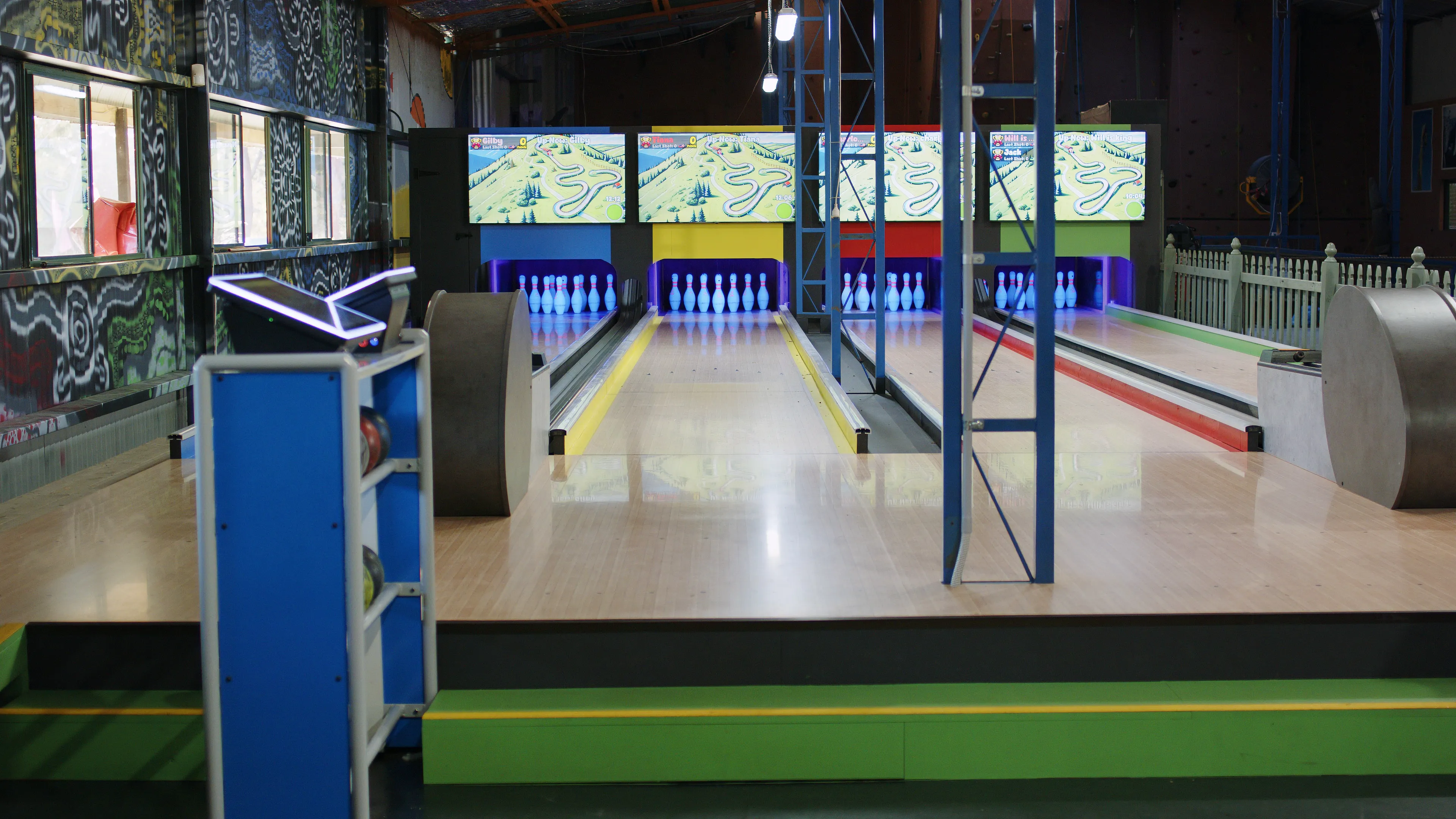
A Kern lane is not a single game. Because LaneCraft controls the software and the pinsetters together, the same lane runs a library of 16 game modes: classic Tenpin scoring one round, a timed race the next, a survival game after that. New modes arrive through software updates, so a Kern lane has more ways to play next year than it does today.
Removing the gutter did not remove the challenge. The game modes put difficulty back on your terms: chase an escalating target, survive elimination, race an opponent around a track. When you want competition, a Kern lane can ask far more of you than traditional scoring ever did, and when you want a relaxed game, it is that too.
That is the part no footprint or ball can deliver on its own. The format makes bowling fit your space; the software makes it worth playing for years.
Specifications
Space and Specs at a Glance
Lane length
~12 m
Total installed length
~18 m
12 m lane, 3.5 m approach, 2.5 m machine room
Minimum ceiling height
2.1 m
Above the lane surface
Set-down below lane
~390 mm
420 mm to finished floor level
Power
~400 W
Per lane motor, during resets only
Price
From $92,000
Single lane, installed, with software. Double lane from $139,500.
Surface and balls
Laminate, Kern Balls
High-pressure laminate, no refinishing. Lightweight, same-weight balls.
Planning a build with an architect or builder? Our technical guide for the trade covers the dimensions and coordination in full.
Common Questions
Frequently Asked Questions
What does KERN mean? +
The name comes from Kern, the German word for core. It describes the intention: bowling stripped back to the part that matters, the ten pins and the chase for a strike, with the friction around it removed.
Who created KERN? +
KERN is LaneCraft's own compact lane format. It was proven at Toboggan Hill Park in Nelson Bay, NSW, where four Kern lanes have run commercially since June 2025, and it is now the format we recommend for most homes and boutique venues.
How is Kern different from other compact bowling lanes? +
Most compact formats shrink the game to fit the space: smaller pins, novelty balls, or a pin arrangement most Australians have never played. Kern keeps the full-size pins and the Tenpin triangle that Australia already knows, and finds its footprint in the lane length and a ball scaled to match. It is a shorter lane that does not play like a compromise.
Do you need bowling shoes to play Kern? +
No. Because Kern Balls are lighter and more accessible, you no longer need the big run up that you need in Tenpin. Anyone can pick up a ball and play straight away, in whatever they are wearing.
How much space does a Kern lane need? +
A Kern lane needs approximately 18 metres in total: a 12 metre lane, a 3.5 metre approach, and a 2.5 metre machine room. Minimum ceiling height is 2.1 metres above the lane surface. That compact footprint is roughly 8 metres shorter than a regulation Tenpin lane, which is why Kern fits in homes, sheds, and venues where a full lane never could.
Is Kern the same as Ninepin bowling? +
No. Kern uses the standard Tenpin arrangement of pins, so the strike you are aiming for is the one most people already know. What it borrows from Ninepin is the accessibility: light, same-weight balls and no shoes required.
Is Kern a smaller or mini version of bowling? +
No. Kern keeps the full-size pins of regulation Tenpin, and the ball is scaled to the shorter lane so it plays much the same way. It is a compact lane, not a shrunk-down game. There are no reduced pins or novelty equipment, and the pins are set by the same USBC-approved string pinsetters we fit to our full-size lanes. It is just the parts of bowling that matter, in a footprint that fits a home or a venue.
Can you play normal Tenpin games on a Kern lane? +
Yes. Because Kern keeps the ten-pin layout, traditional frame scoring works exactly as you would expect. On top of that, every Kern lane runs LaneCraft's game modes, so the same lane plays classic Tenpin one round and a timed race the next.
Curious whether Kern fits your space?
Kern was built to make a real bowling lane possible in places that could never take a regulation one. Draw your room in the Lane Planner and see in a minute whether a Kern lane fits, then tell us what you are imagining.
Open the Lane Planner →