Is Compact Bowling Right for You? A Guide for Homes and Venues
Compact bowling suits a home or venue that cannot take a 26 metre lane, or would rather not. How a KERN lane keeps real bowling in 18 metres.
The Short Answer
We believe there are three inevitabilities in life: death, taxes and running out of space. The third is what brings most people to compact bowling, and it’s what this guide is about. So the short answer is yes. For most homes and venues, compact bowling is the right choice, and not only the ones with space constraints.
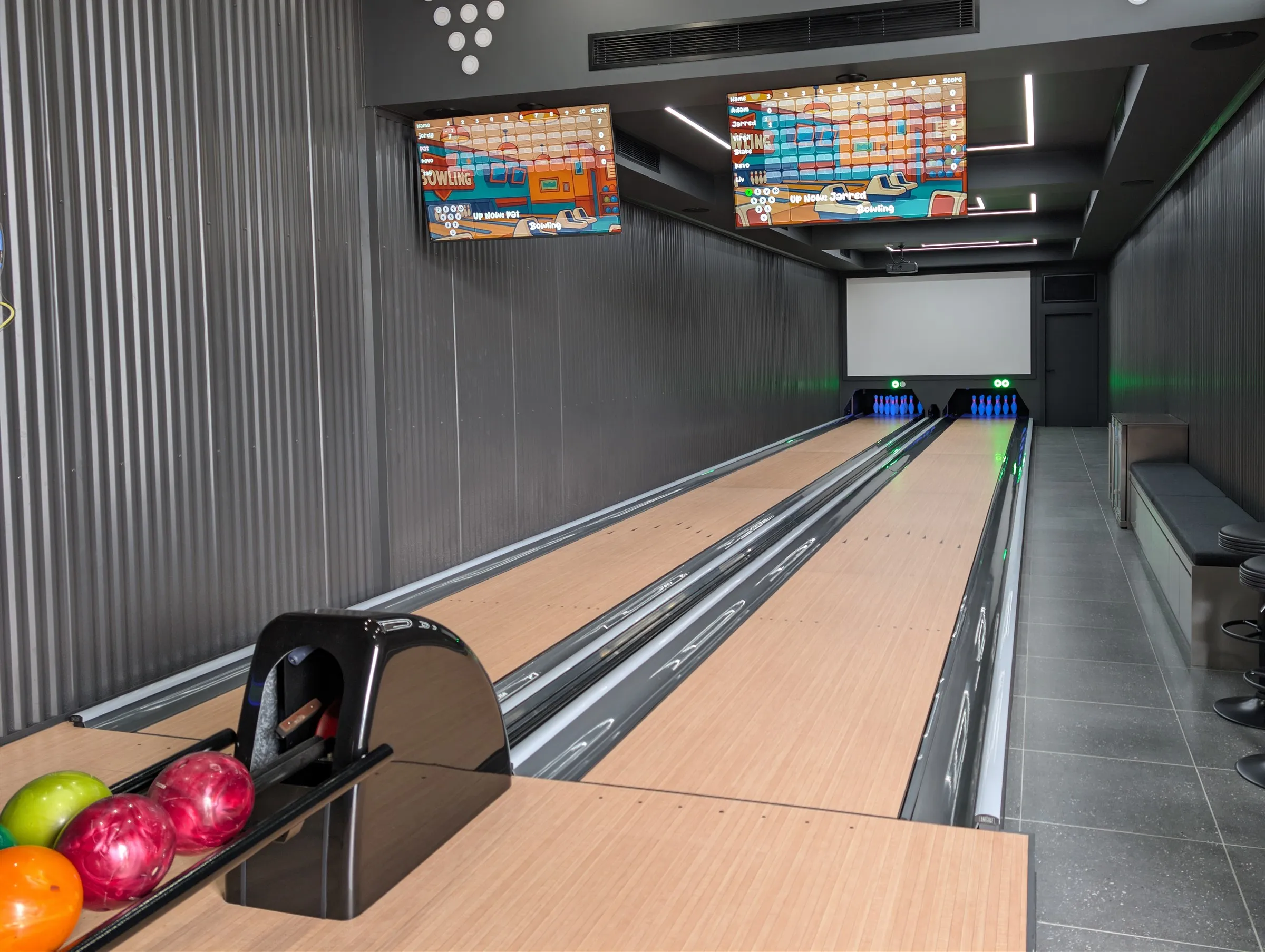
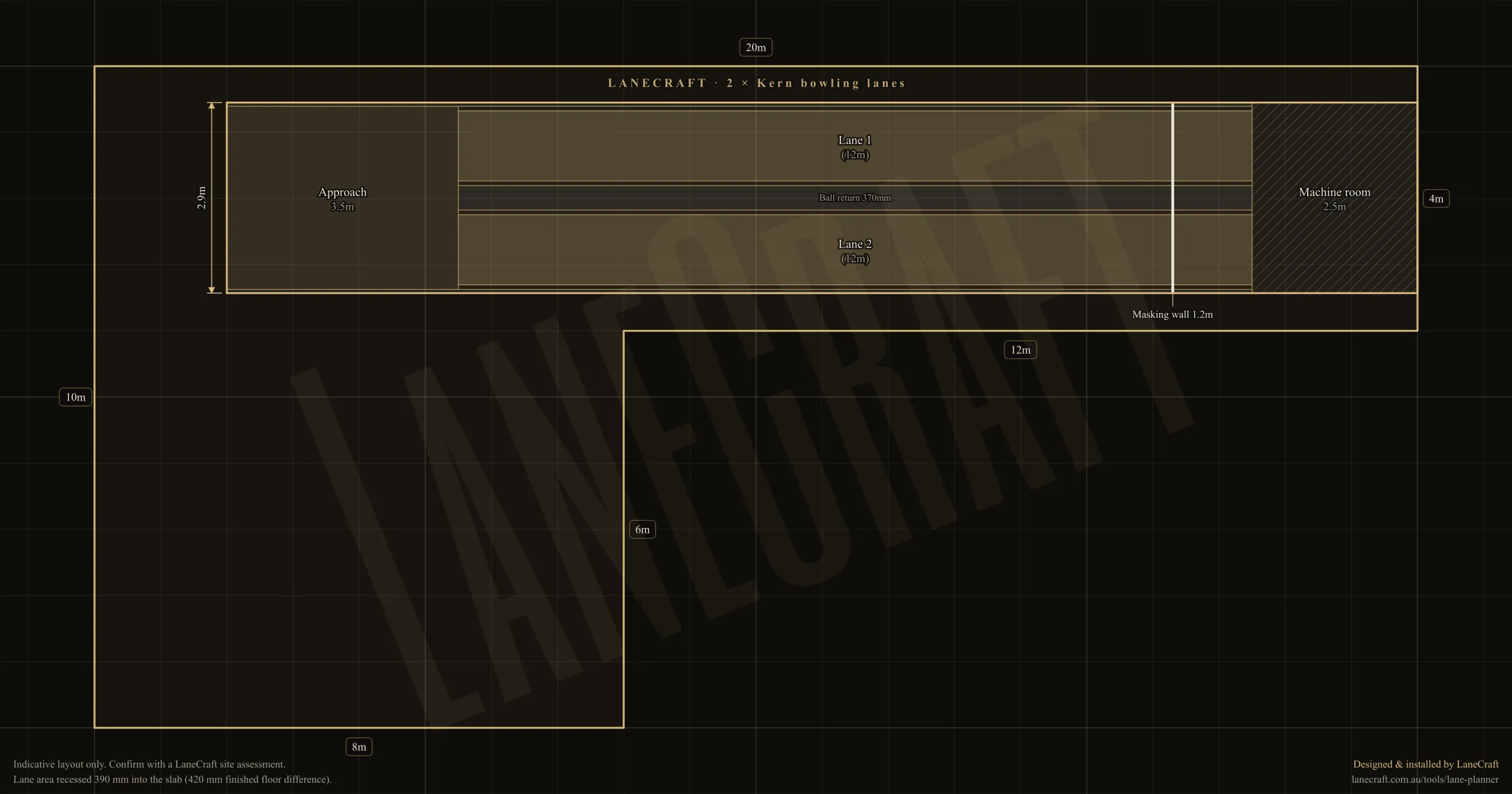
KERN™ is LaneCraft’s answer to compact bowling: a short lane with a compact footprint, built to play like full-size bowling. A Kern lane is 12 metres long and needs about 18 metres end to end. It uses the ten full-size pins of Tenpin, light Kern Balls that are all the same weight, no gutters and no bowling shoes. We designed it here in Australia, and four Kern lanes have been running commercially at Toboggan Hill Park in Nelson Bay since June 2025.
What Counts as Compact Bowling?
Compact bowling is any lane built meaningfully shorter than regulation. A regulation Tenpin lane is 18.29 metres (60 feet) from the foul line to the head pin, and about 26 metres once you add the approach and the machine room. Compact lanes run from about 9 to 14 metres of playing length, which is 15 to 20 metres installed. That’s the difference between a dedicated building and a large room, and it’s why almost every home lane and most boutique venue lanes are compact ones.

There are three ways to get a lane into that footprint, and they give you three different games.
The first is to shrink the whole game to fit. Mini bowling uses half-height pins and a small ball. Duckpin uses shorter pins, a palm-sized ball and three shots a frame. Both keep the footprint small, and both change the game to do it. They’re fun, and they’re the right answer for some rooms. They’re also why compact bowling has a reputation as bowling’s little sibling.
The second is to just shorten a Tenpin lane. It looks like Tenpin because it is Tenpin, and the heavy ball, the shoes and the sizing all come with it. What doesn’t come with it is the game. A regulation lane is long enough for the ball to hook into the pocket, and reading that hook is a big part of bowling well. Over a compact lane the ball doesn’t have the distance to turn, so a straight shot does the job, strikes come easier than they should, and nothing you learn on the short lane carries back to a full one. If you want a lane to get better at bowling on, this isn’t it. And it still asks who in the house will actually bowl a heavy ball.
The third is to shorten the lane and scale the ball. The pins stay full size, and the ball gets lighter and smaller to suit the shorter distance, so it does to the pins what a full-weight ball does on a full-length lane. That’s the Kern format, and the rest of this guide is about why we think it’s the right answer for most homes and venues.
Which one is right for you depends on what you want to keep. If the answer is “the bowling”, read on.
Is It Real Bowling?
Yes. If you ask someone what bowling is, they’ll describe ten pins in a triangle and the noise they make when they go down. So a Kern lane has the full-size Tenpin pins in the standard triangle. What we changed is the ball. A Kern Ball is 160 millimetres across, drilled with finger holes, and a lot lighter, scaled to the shorter lane. Standard frame scoring works exactly as you’d expect. It has the compact size. It doesn’t play like the compact lanes you’ve used before.
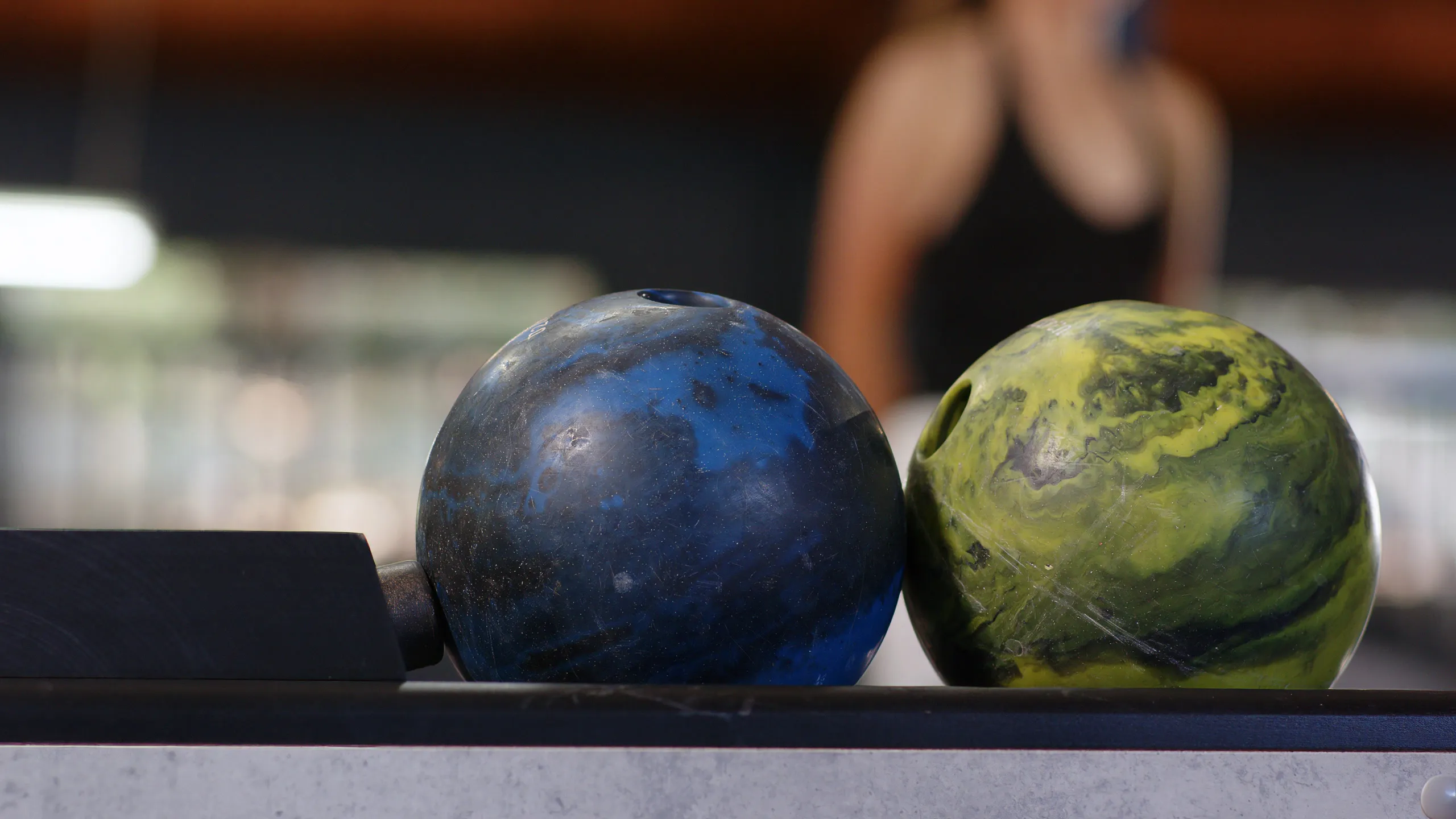
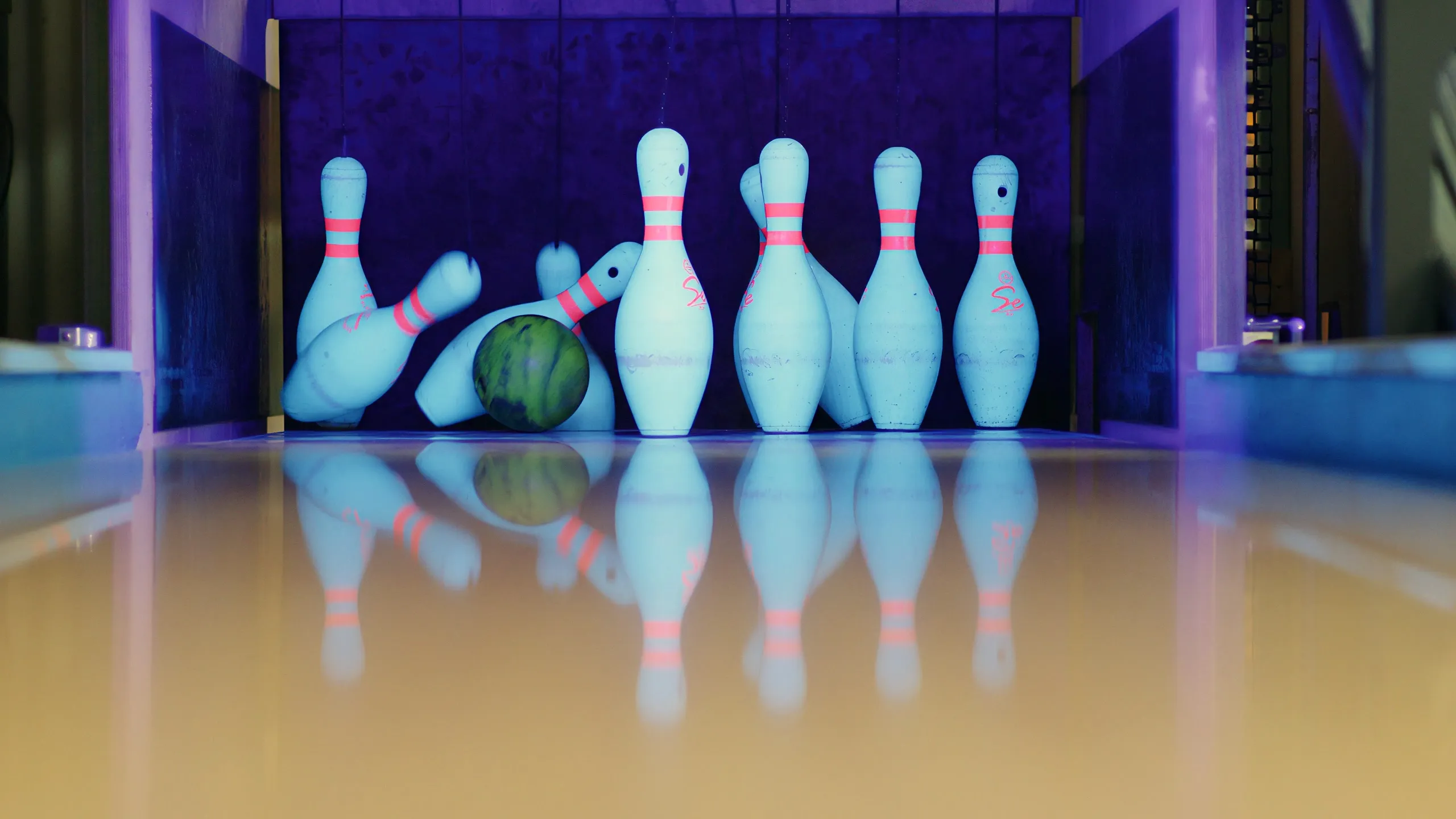
It would be easy to read all of this as bowling with the difficulty turned down. It isn’t. A strike on a Kern lane still takes a good line, the right speed and a clean release, and a better bowler will still have an advantage. If anything the lighter ball asks more of you. A full-weight Tenpin ball carries enough energy that a strong bowler can get away with a messy hit and still push it through the rack. A Kern Ball carries less, so the pin action has to come from where you put the ball rather than how hard you threw it.
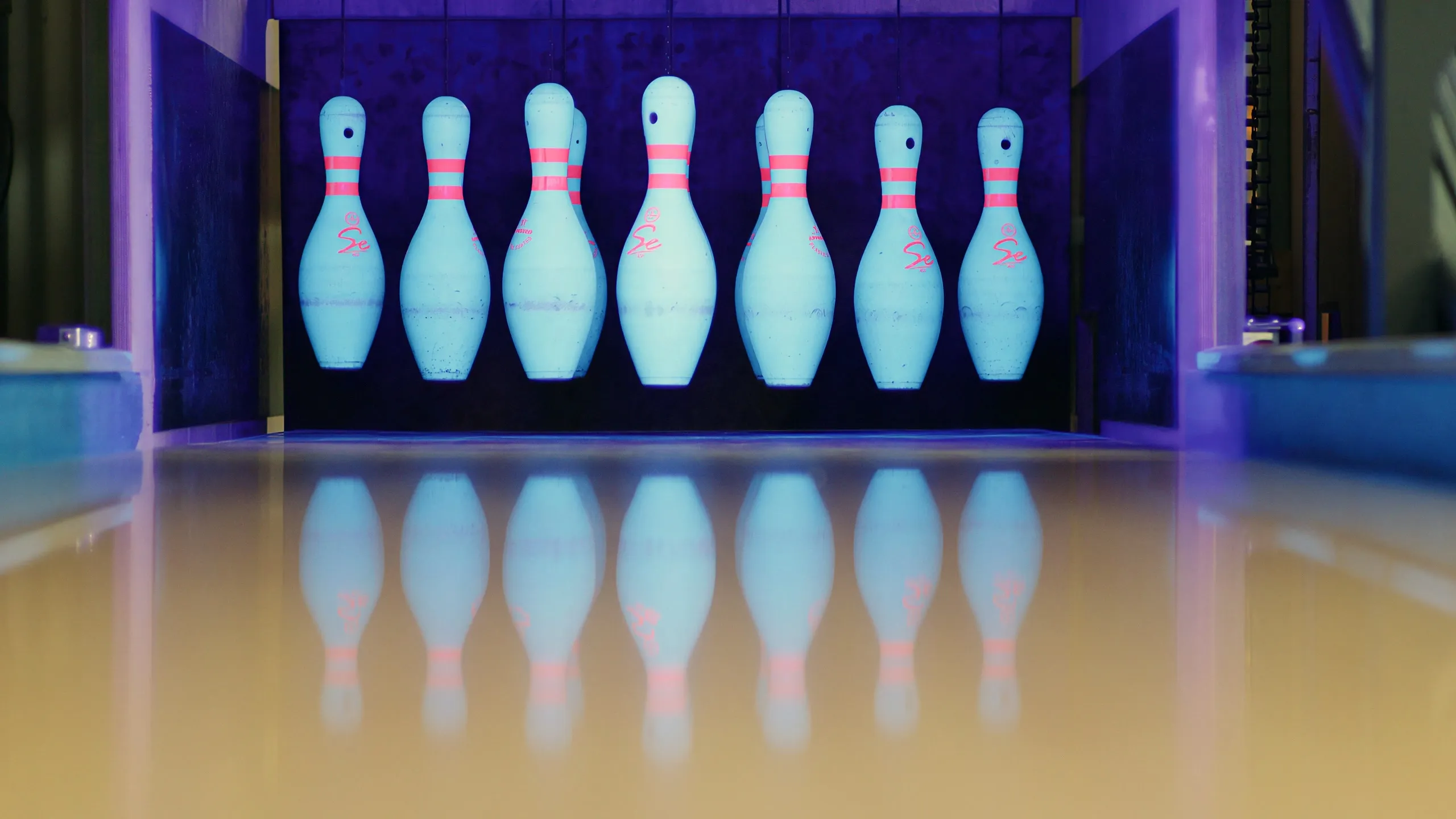
And plenty of our game modes ask for something harder than a strike. Save the Queen wants every pin down except pin 1, and halves your score if you touch her. Tall Poppies turns the handicap into the game: the better you bowl, the fewer pins are set for your next shot. The highest scorer each round loses a random pin from their rack for the rest of the game, while the beginner keeps a full set. How many you lose matters less than which ones. Lose pins 2 and 3 and the pocket is gone: the head pin falls on its own with little to carry the hit into the rows behind it, so the shot that used to be a strike takes a couple of pins and not much else. Knocking down all ten is one skill. Finding a line through a rack with holes in it is another.
So it is real bowling, but it isn’t necessarily the traditional bowling you know.
The 8 Metres
Compared to a regulation Tenpin lane, a Kern lane saves about 8 metres in length: 18 metres of building instead of 26. That saving is the whole point of compact bowling, and most people hear it as the reason a Kern lane fits where a full lane can’t. That’s true. But a Kern lane goes into a big room just as happily as a small one. It just leaves you 8 metres to do something else with.
In a venue, those 8 metres are where the money is made between games. Food and beverage, with the lanes feeding the bar and the kitchen instead of competing with them for the room. Seating where a waiting group can watch and order rather than stand in the approach. Or a second attraction that gives the same guests a reason to stay another hour. A 26 metre room holds one full-length lane and not much else. The same room holds a pair of Kern lanes and the food and beverage that pays for them. How much the lanes themselves bring in is what our bowling revenue calculator is for.
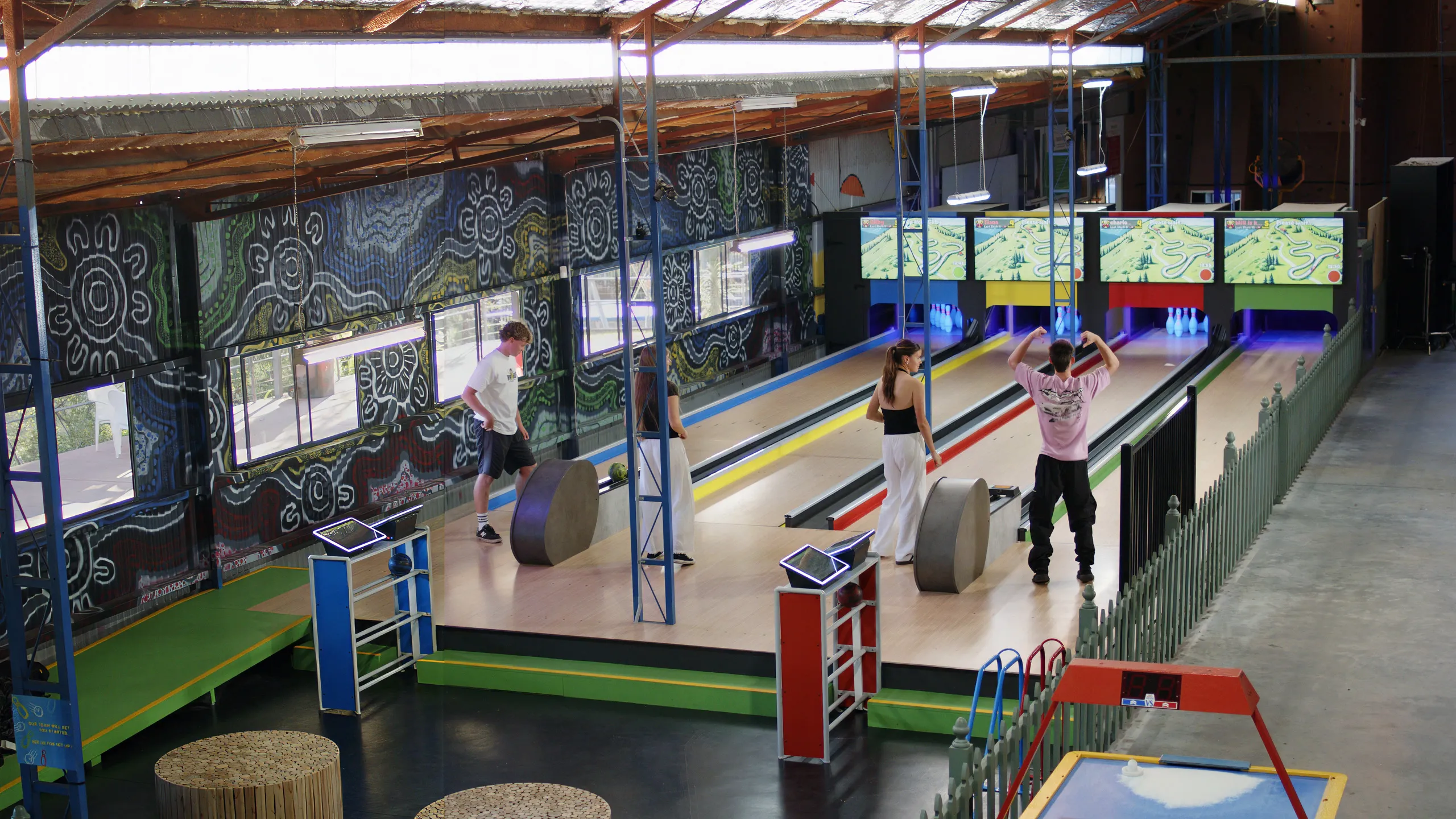
At home, the 8 metres is the difference between a bowling room and a room with bowling in it. It’s the bar, the cinema, the gym, or the seating where people actually watch. A Kern lane is the answer to having less space. It’s also the answer to having more of everything else you love in the same room.
And in the rooms where a full lane was never going to happen, the question stops being whether and becomes how many. Draw your space in our free Lane Planner and it’ll tell you.
Is It Right for You?
If you’ve read this far, you probably already know. Compact bowling is right for most homes and venues, and the Kern format is the version of it that keeps the bowling.
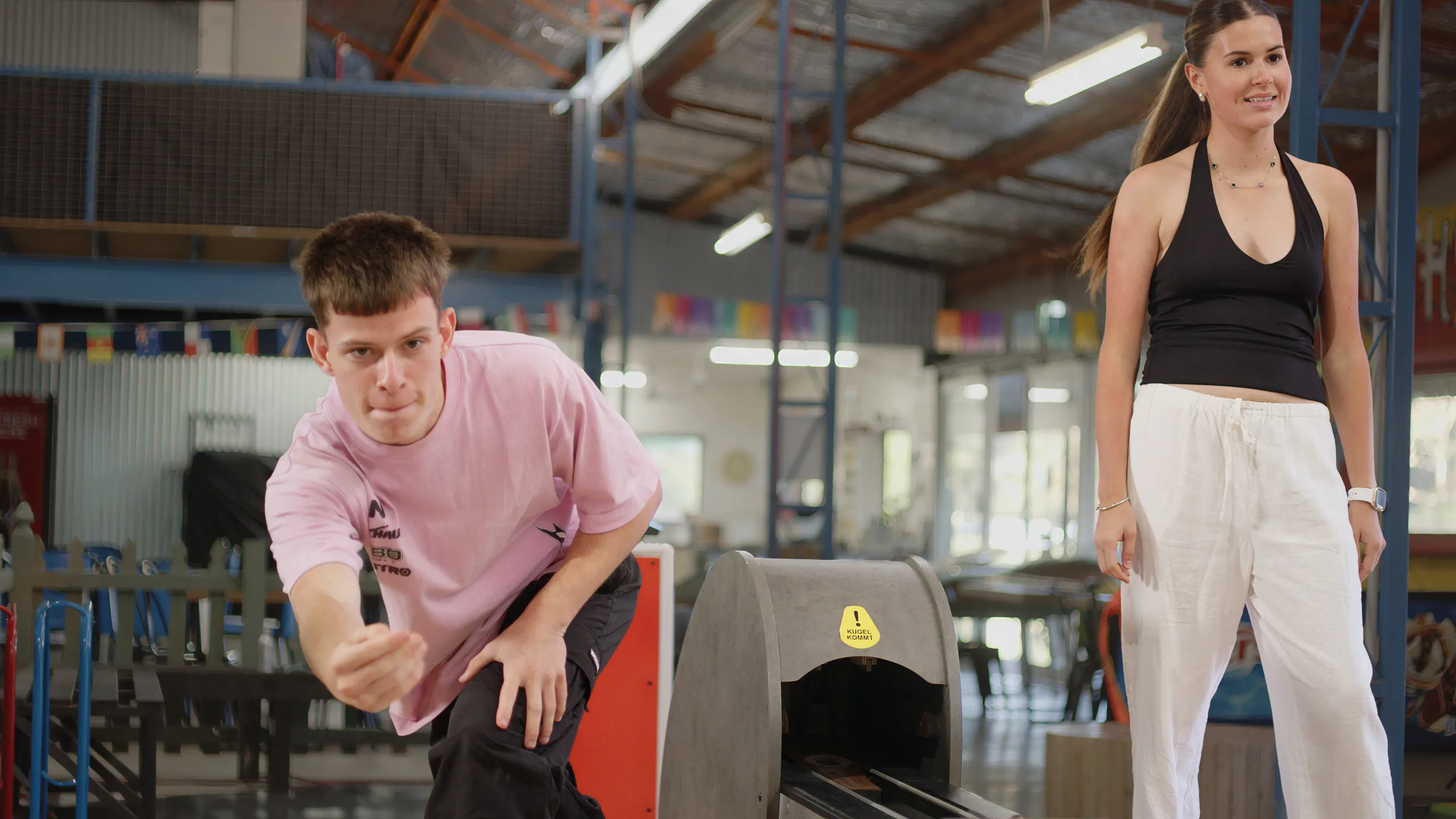
I’m not a good bowler. When I play Tenpin I end up sore afterwards, because I throw the ball rather than roll it. With a Kern Ball that doesn’t happen. If you’ve got a run-up and a release you’re proud of, bring them. The approach is there and the ball rewards a good line. If you haven’t, you can stand at the line and roll it, and that’s a proper way to play rather than a concession. A six-year-old, a grandparent, someone who’s never bowled and someone who bowls every week are all on the same lane, each in their own way, in whatever they turned up wearing.
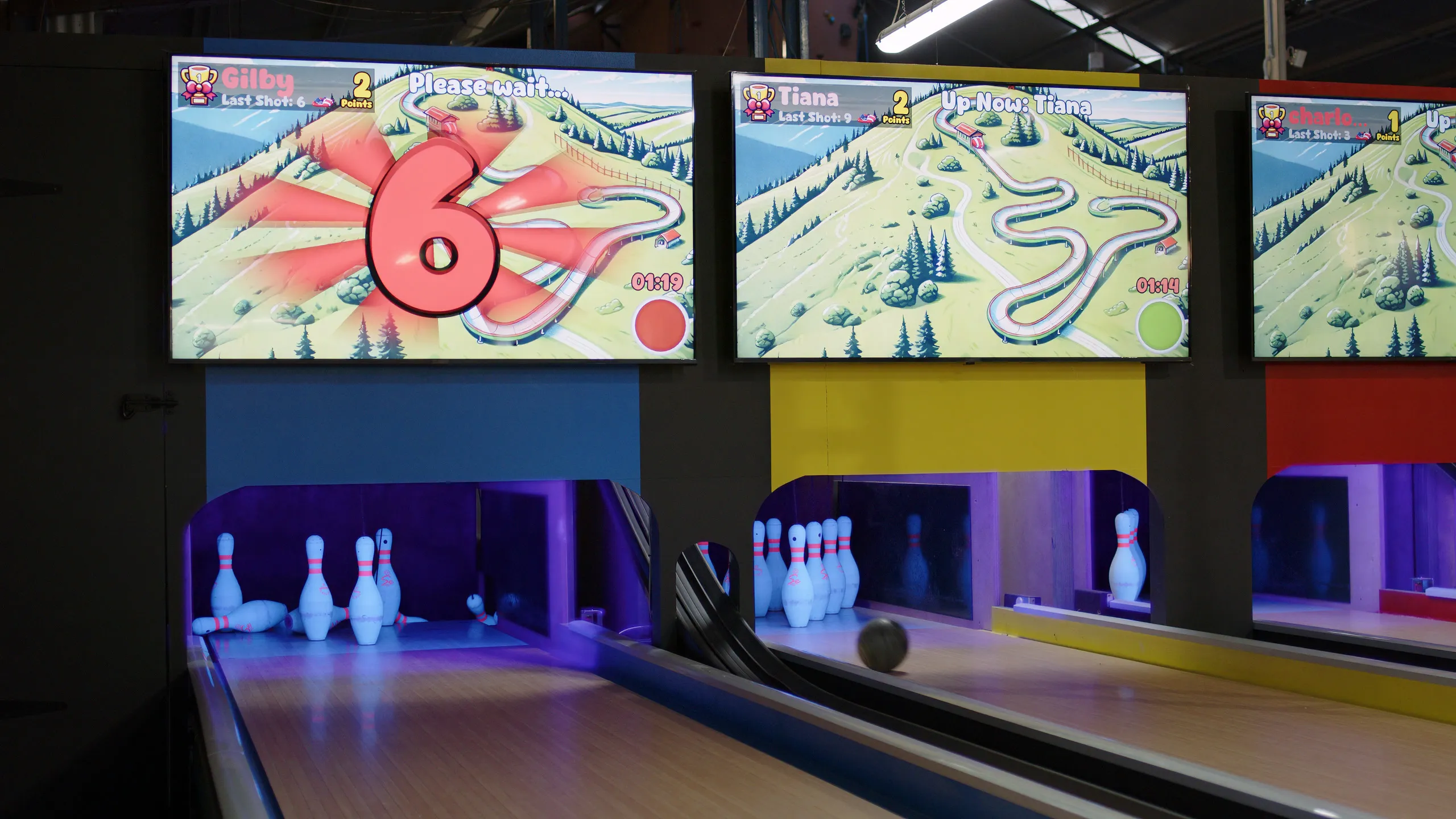
The games library has the full list of game modes, and the home bowling lane and bowling for venues pages cover what a project involves from first drawing to first game.
If you’ve got a room, draw it in the Lane Planner. If the lanes fit, send it to us and we’ll come back with what a Kern installation of that size involves.